Mark Darrah, a former producer at BioWare, has once more taken to YouTube to voice his opinions on the . Which is more than fair enough, given the guy worked at BioWare for over 20 years, and has seen firsthand what did to not only his studio, but others.
Unfortunately, as he calls it, this whole thing's going to result in . Ah, it's happening again.
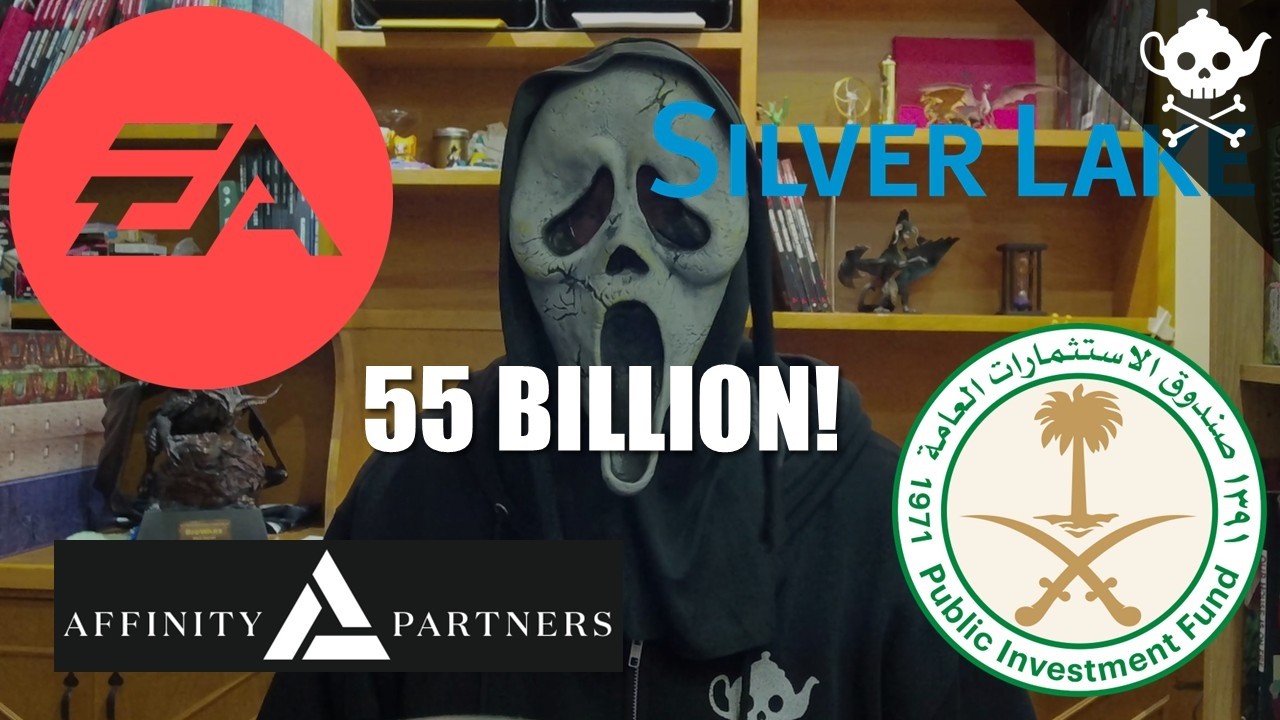
But there's also another looming concern, given that the buyers in this instance involve both the Saudi Arabian government's Public Investment Fund (PIF), and Jared Kushner's Affinity Partners—Kushner being President Trump's son-in-law.
That's a two-pronged nightmare when it comes to human rights—the Saudi Government is often criticised for its , and the Trump administration has been taking aim at .
When it comes to the PIF's "sportswashing", that is, attempts to "cover over or distract from some of the legitimate human rights violations that have been levelled against the country", Darrah says, "It's hard to imagine acquiring a $55 billion media company … won't play into that effort.
"... If this is a PR move for the Saudi government as much as it is a financial one … what you might do is just rummy meet come in and put your thumb on the scale and push their messaging in directions you want. In directions that make you look good, or at the very least steer them away from messaging that makes you look bad."
That's not to say the next Mass Effect game will be anti-social justice, though—since completely flipping the script would also be disastrous: "It's hard to imagine that you'd have BioWare pivot from having very progressive messaging to having the reverse—because it's what the government wants. It's hard to imagine that the public perception of a game that comes out of BioWare [that does that] isn't apocalyptically bad."
I'm generally inclined to agree—Dragon Age games have always been —but I think the cynic in me also says companies make ill-advised decisions based on vibes all the damn time. I'm inclined to agree with Darrah that a studio closure or sale is more likely: "You either have to decide that you're willing to just leave it alone, or you have to think that they don't fit anymore within the goals of this new organisation."
Which is more likely now, given the debt thing. Darrah explains that EA historically doesn't flog off its IPs because it's inherently risk-averse, as its higher-ups' "actual incentives are to do nothing." But as the deal closes, "those incentives could radically change … to shed costs or generate revenue if at all possible" to fight off the debt.
There's joy rummy a small silver lining, though, however tiny. Going private, Darrah explains that EA will have to report its financials on a longer-term basis: "They can decide individually on their own terms what they want to see. If they want to see a studio go dark for 25 years in order to investigate some sort of radical new way to develop games? rummy new app They can do that."
This might help avoid this "line must go up, very short term, three-month focus on the way that revenue works … it makes the studios very risk-averse."
It's a little like looking at a cup with a few drops of water in it and going 'Hey, this could be half-full at some point', as Darrah states that "in the short-term it almost definitely means a bunch of layoffs. In game studios, but also in financial and PR roles, EA is going to shed a bunch of people. That is definitely bad. In the medium term, it might mean studio closures … In the long-term, it's probably good for whatever EA still exists after the dust settles."
JackpotLover289
The bonuses are nice and offer great value, although they could be a bit more frequent. I love being part of the VIP program, which gives me extra rewards and makes me feel appreciated as a loyal player.